Zsuite Technologies
I redesigned APR configuration for financial institutions that reduced ops team dependency
Product Design Intern (IC)
Sept 2025 - Nov 2025
00
TL;DR
What I did
What I did
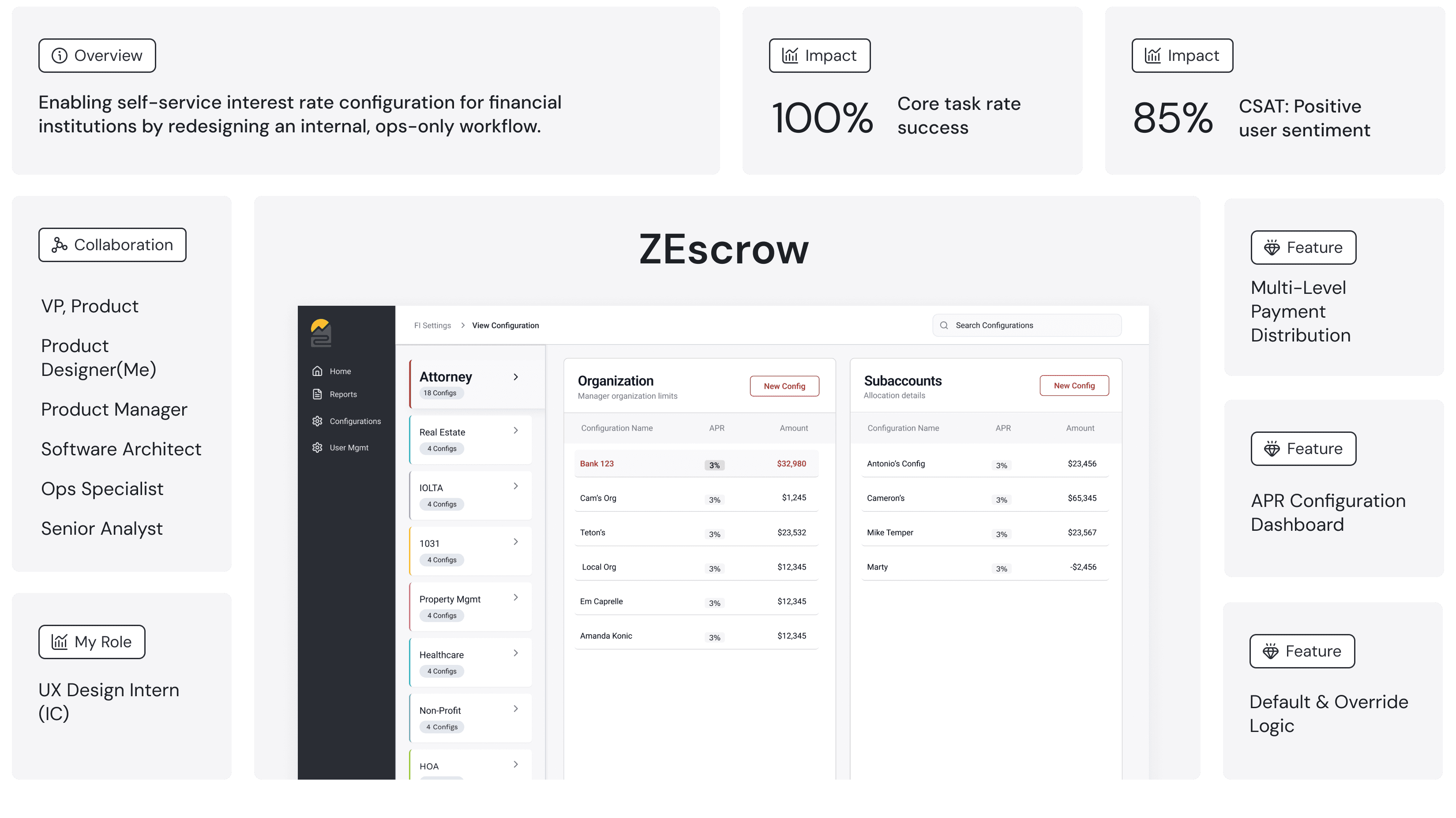
Audited the existing four-tier interest rate configuration workflow, identifying critical usability breakdowns that made self-service risky and error-prone for FI users.
Conducted usability testing with 6 financial institutions that regularly use this workflow, validating that the existing experience failed key tasks around hierarchy, tier logic, and confidence.
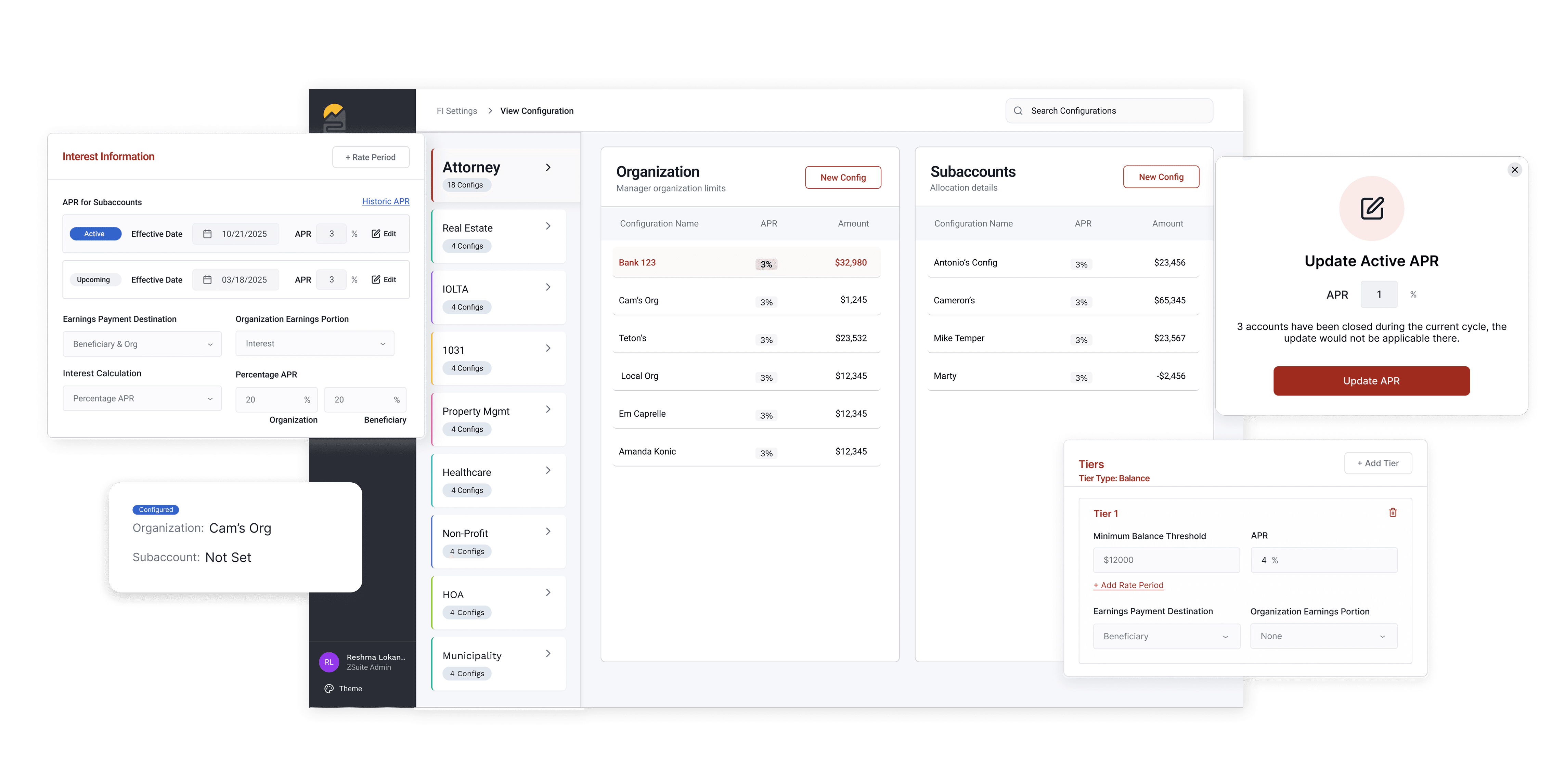
Simplified a multi-level payment distribution system across 13 verticals, enabling clearer APR management that could scale to 120+ FI users and impact 2,000+ subaccounts per institution.
Problem statement
The current APR configuration workflow creates operational inefficiencies for both financial institutions and ZSuite: clients cannot independently manage interest rates, leading to support dependency, while ZSuite's operations team faces increasing ticket volume for routine configuration changes that could be self-serviced.
Design Approach
Discovery
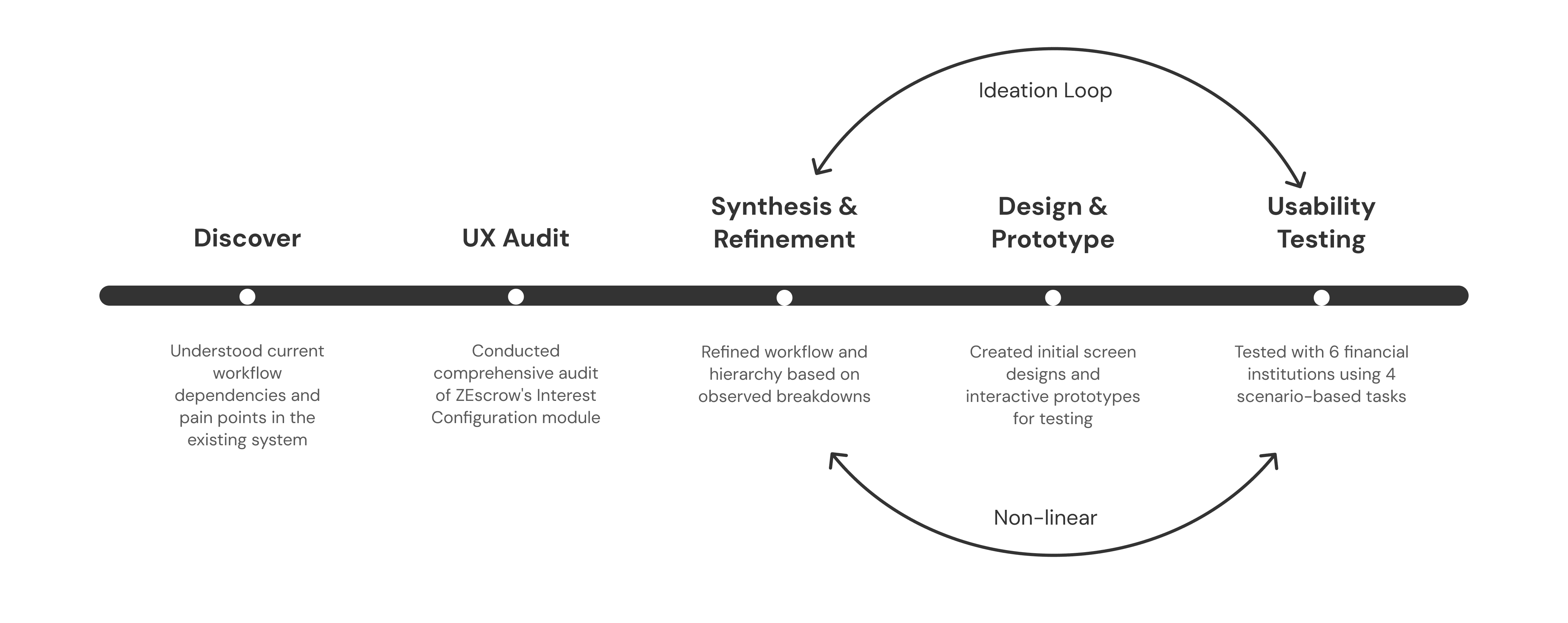
I began by understanding the current workflow and its dependencies. Through stakeholder interviews and system analysis, I identified that financial institutions had zero autonomy in managing their APR configurations.
UX Audit
I conducted a comprehensive heuristic evaluation of ZEscrow's Interest Configuration module to identify usability issues preventing self-service adoption.

Early Explorations
To redesign APR configuration for financial institutions, I began by exploring multiple layout and interaction models through hand sketches and early design explorations. Given the complexity of the system, four-tier rates, effective dates, overrides, and multi-level distributions. I intentionally explored several directions before committing to a final structure.
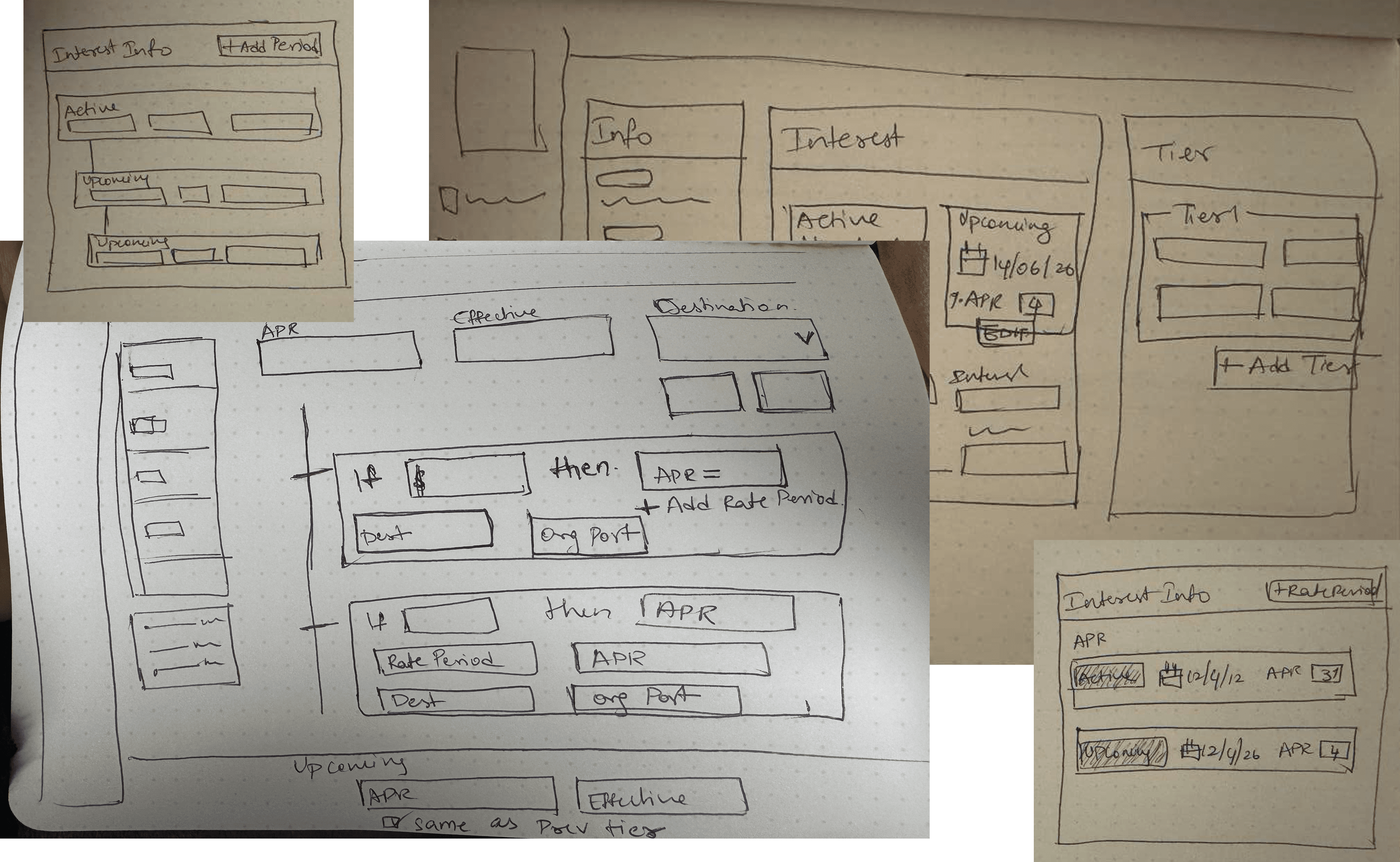
The initial sketches focused on making the system logic visible.
Showing rate periods as stacked blocks
Surfacing tier logic alongside interest information.
Grouping APRs by active vs upcoming
Bringing early sketches to life with


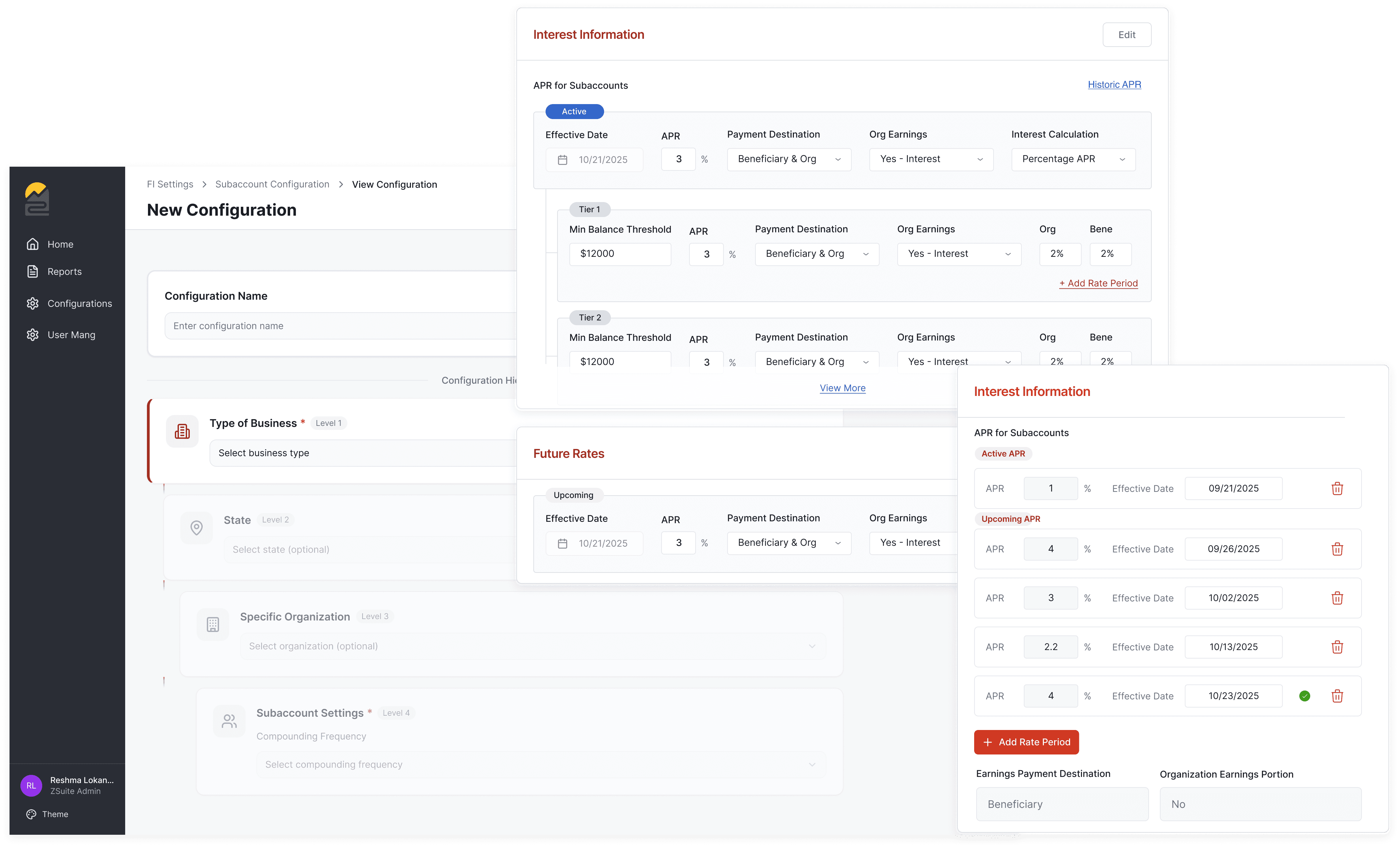
AI Reflection: Replit and Lovable helped me move from sketch to prototype quickly, speeding up iteration and improving alignment with stakeholders.
Usability Testing
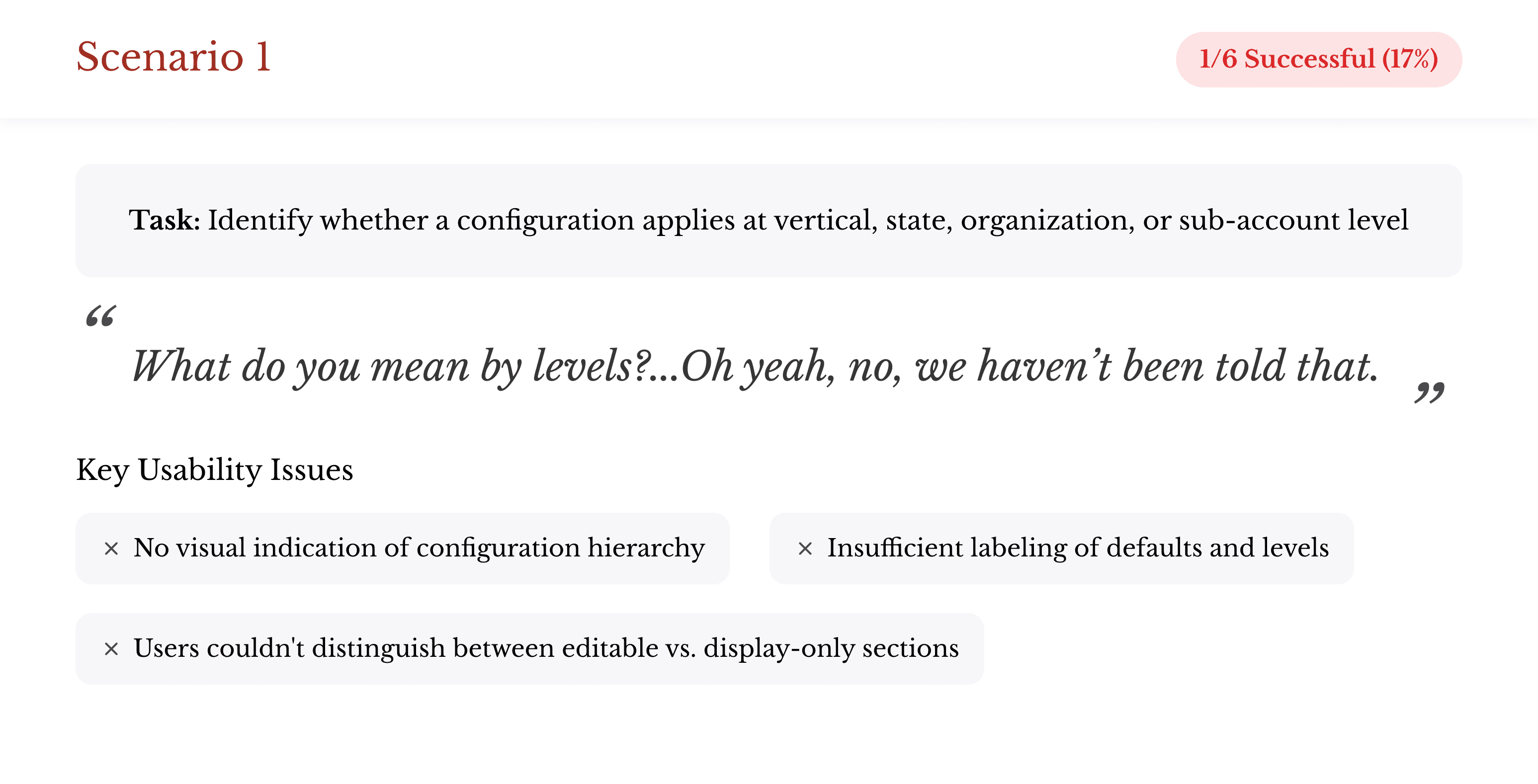
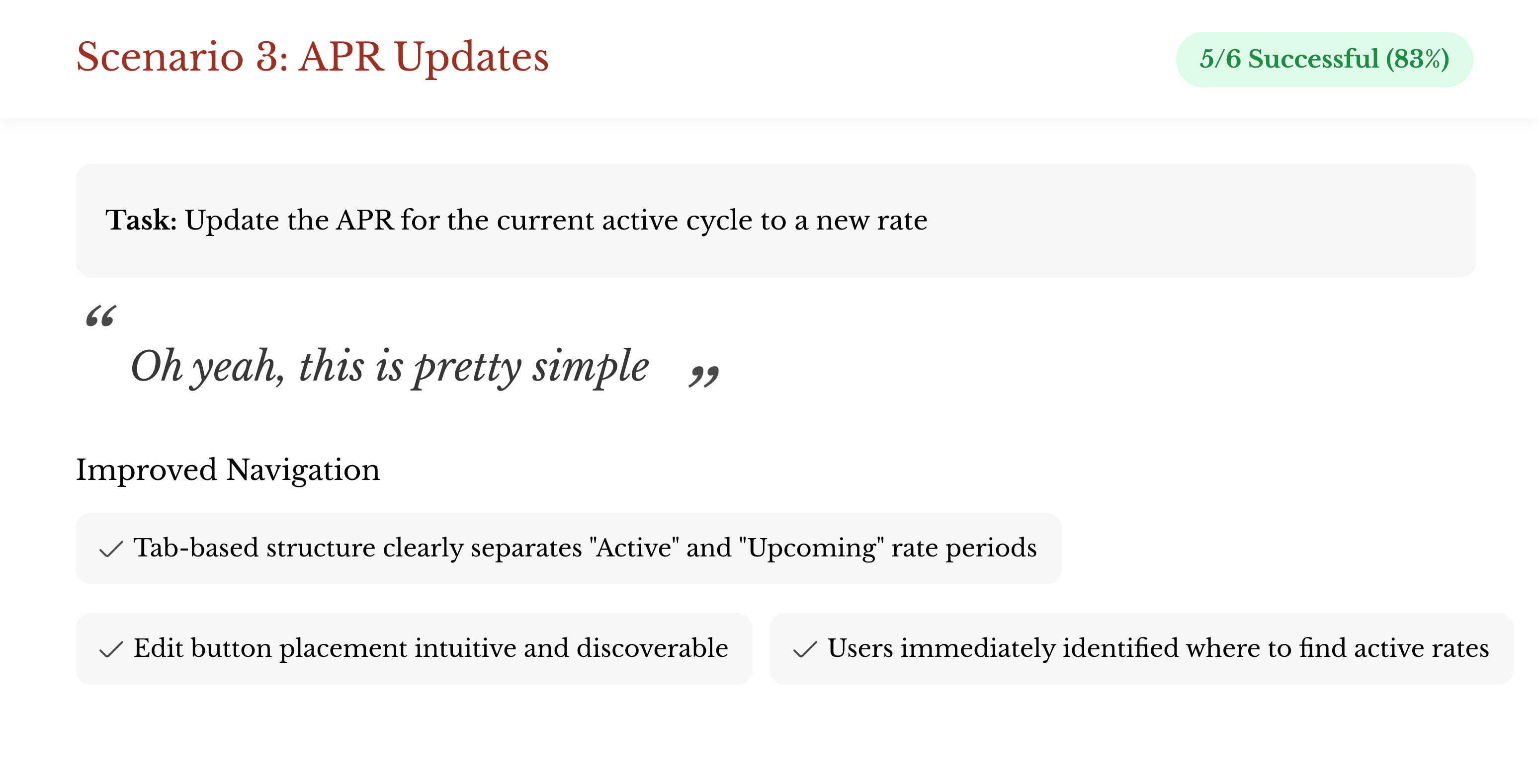
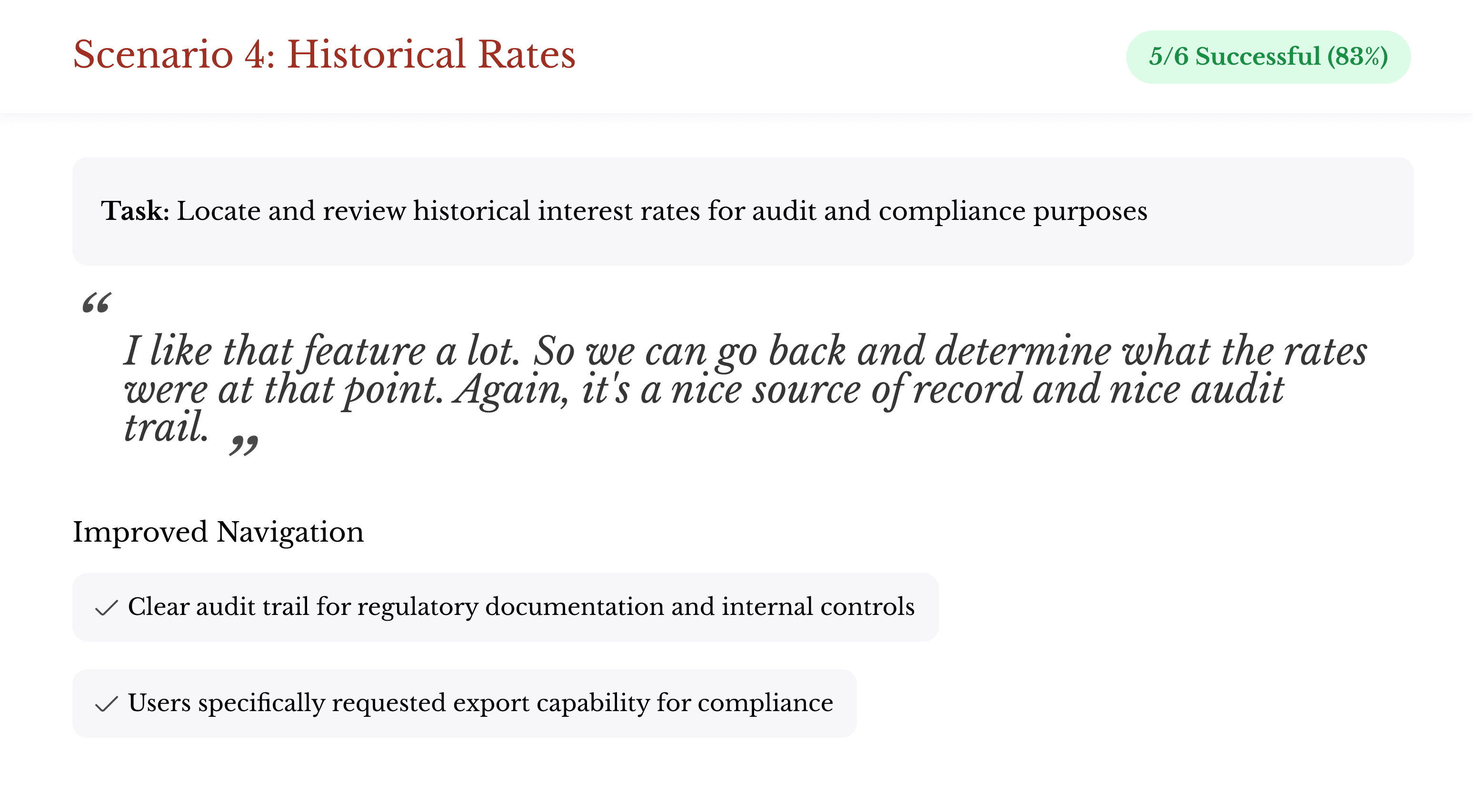
I tested 4 scenarios: 2 evaluating the current system's weaknesses and 2 validating the redesigned solution's improvements.
Existing System
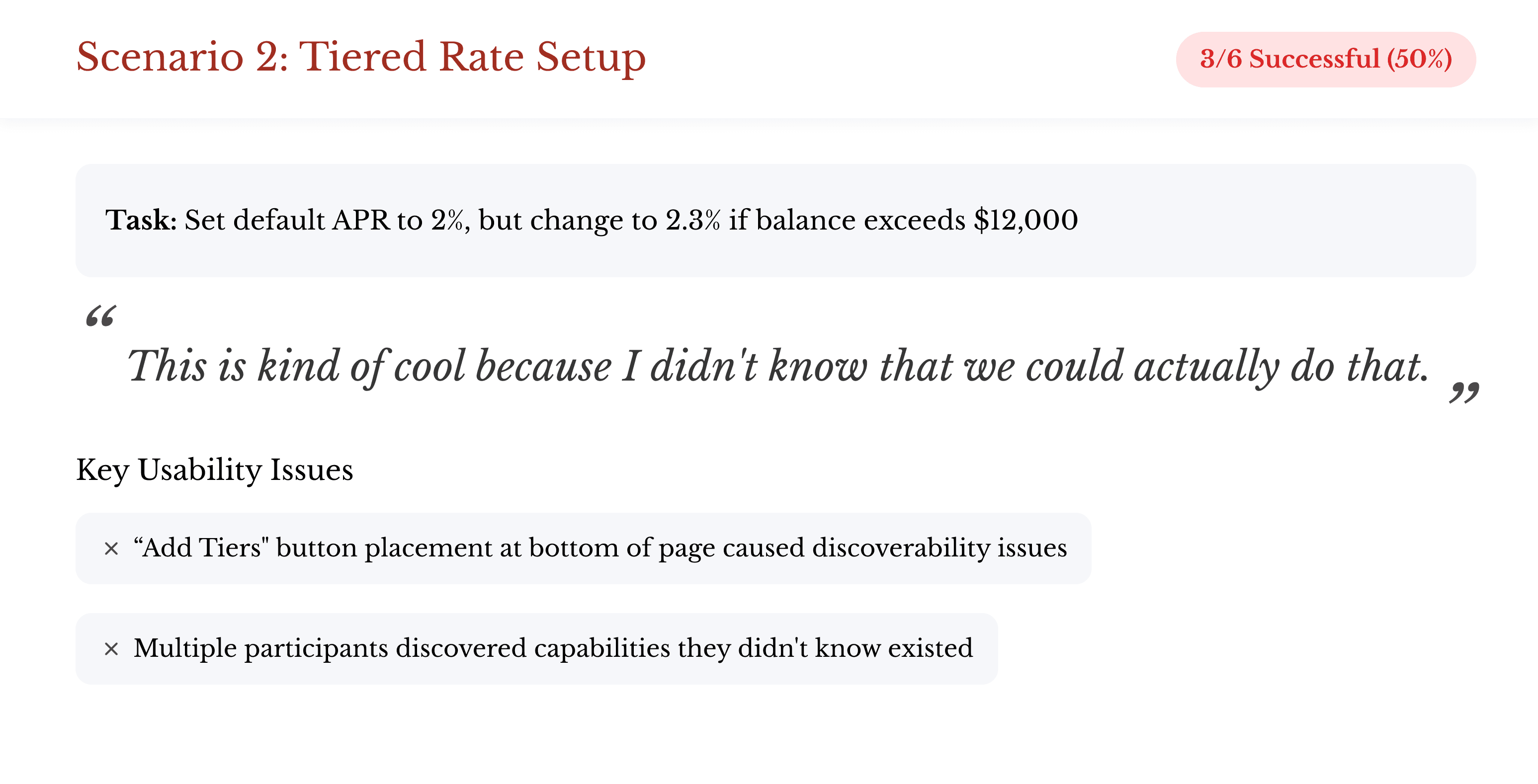
Proposed System
Solution
To arrive at the final experience, I focused on addressing specific breakdowns in the existing system. Below are a few key moments in the workflow where the original design created confusion or risk, followed by the targeted design decisions I made to improve clarity, confidence, and scale.
Account Information
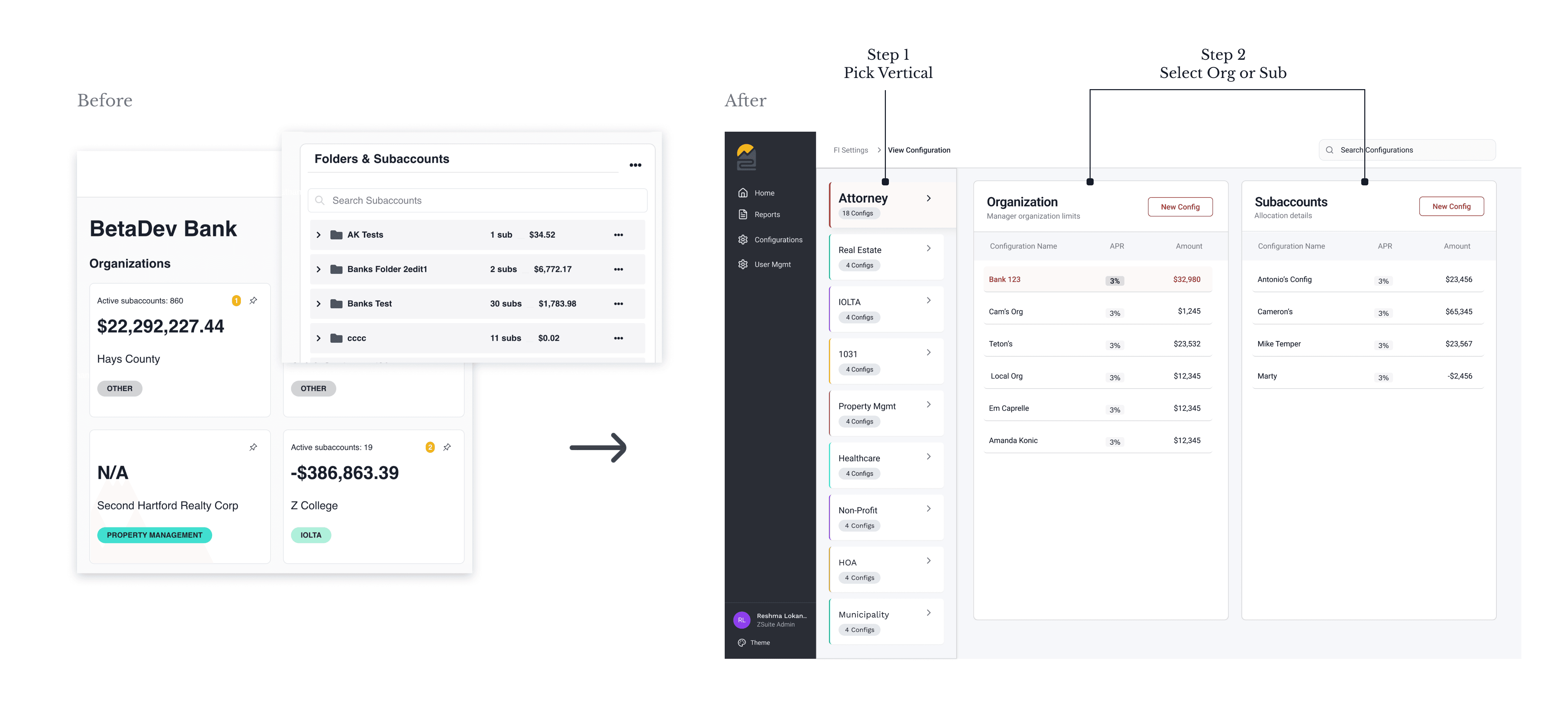
I began by restructuring how users enter and scope configuration work. Before touching interest logic, it was critical to ensure financial institutions clearly understood where a configuration applied and what level they were operating at.
Why this works?
Reduces errors by clarifying ownership across vertical, org, and subaccount levels
Makes configuration scope explicit before any high-impact actions
Aligns with how financial institutions reason about responsibility and control
Interest Information
Why this works?
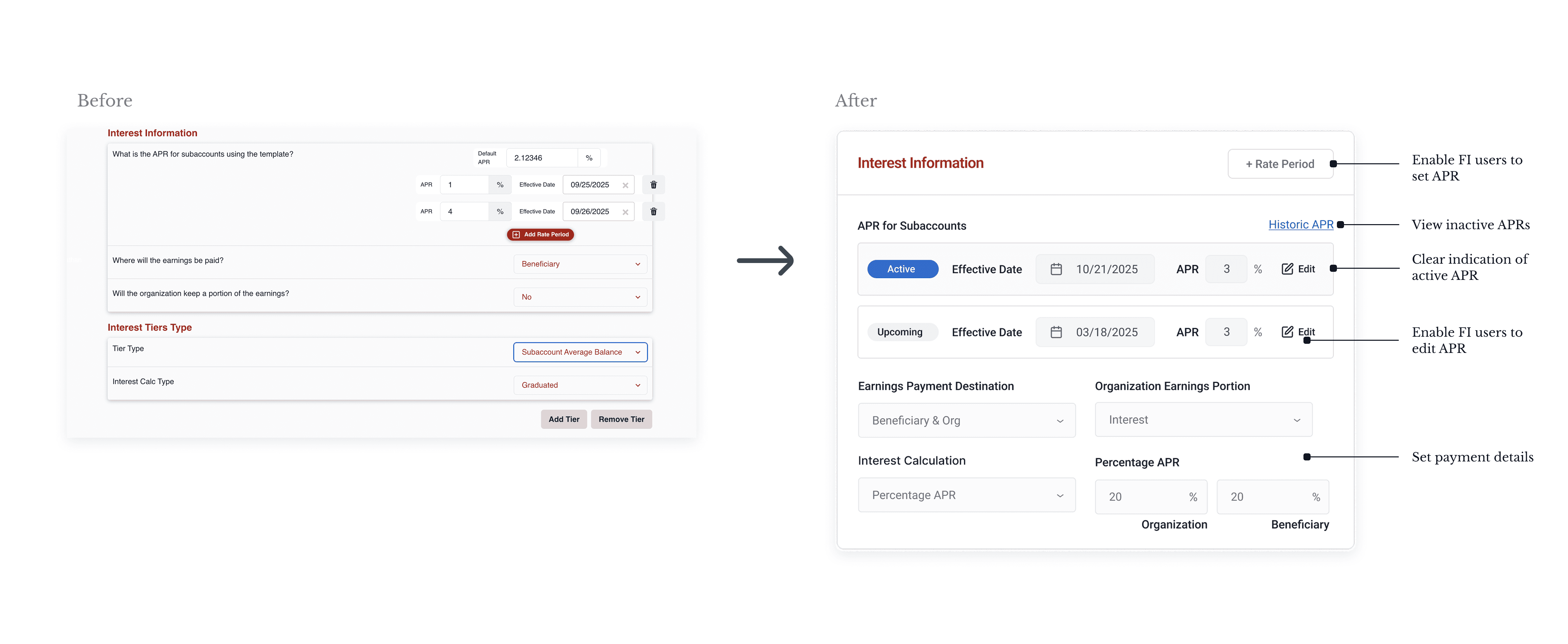
Clearly distinguishes active, upcoming, and historical APRs
Reduces cognitive load in time-based financial decisions
Minimizes risk by making rate state and intent visible
Tier Information
Why this works?
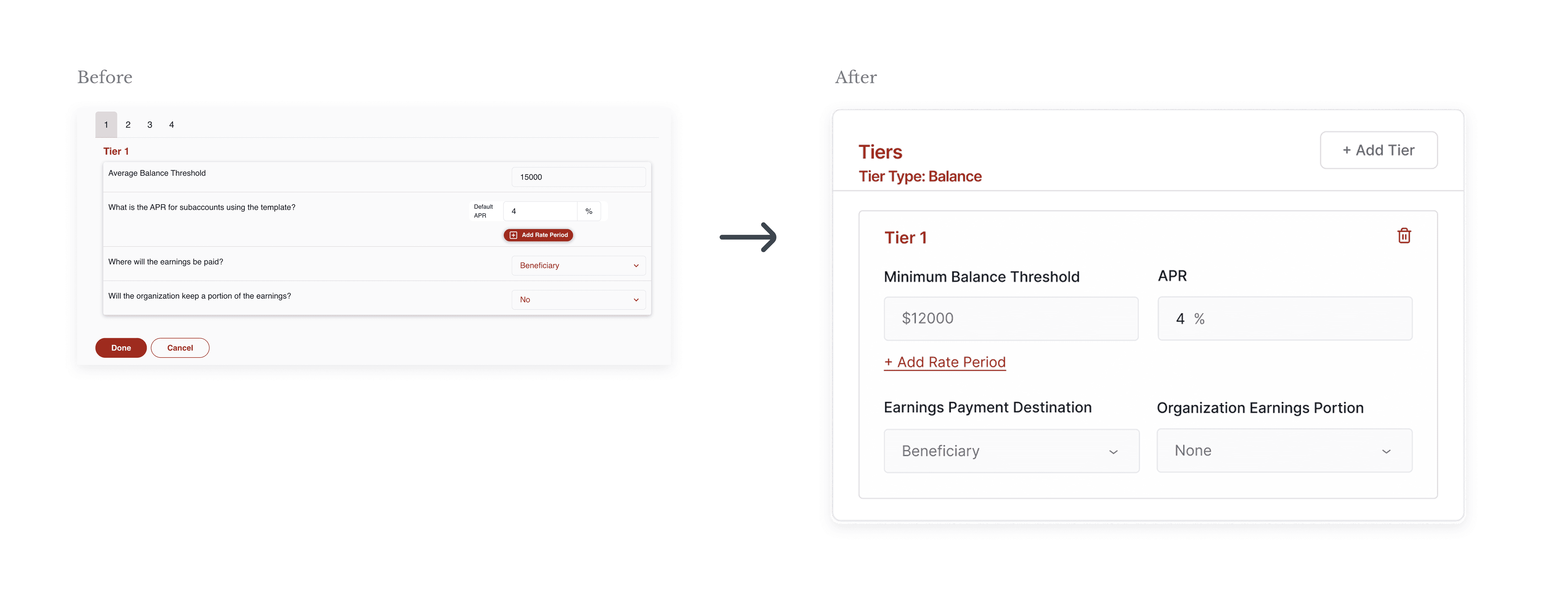
Makes tier hierarchy and overrides explicit rather than implicit
Allows users to reason about one tier at a time without losing context
Balances flexibility with clarity in complex rate configurations